
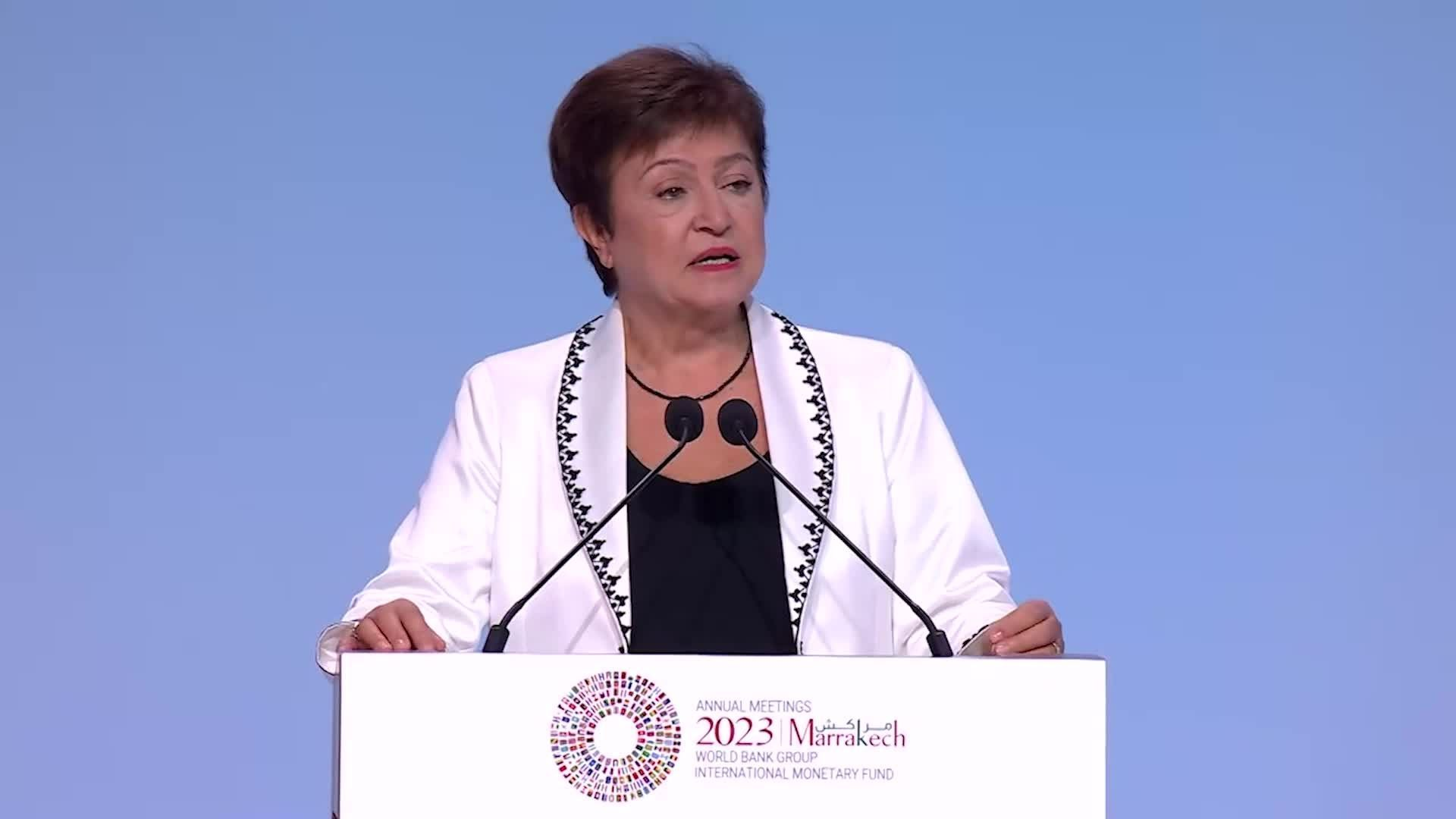
The International Monetary Fund expects at least a dozen countries to seek new financial assistance as surging energy prices and supply chain disruptions linked to the Middle East conflict strain economies, Managing Director Kristalina Georgieva said on Wednesday.
Speaking during the IMF and World Bank spring meetings in Washington, Georgieva said demand for support could range between $20 billion and $50 billion, including both new loan programs and expansions of the IMF’s existing 39 financing arrangements.
She did not identify specific countries requesting aid but noted that several sub-Saharan African nations are among those seeking support.
Georgieva added that the IMF is not currently in discussions to expand Egypt’s $8 billion program, despite the war’s economic impact.
Supply disruptions likely to persist
Georgieva warned that disruptions stemming from the closure of the Strait of Hormuz could have lasting effects, even if the conflict ends quickly.
“These disruptions are not going to evaporate overnight, even if the war ends tomorrow,” she said, pointing to logistical constraints in global shipping.
“Because a tanker is a slow moving vessel, it would take 40 days to get all the way to Fiji. So we need to be prepared that the impact of the supply disruptions in the weeks ahead is going to be deeper.”
She highlighted risks to supply chains, particularly for Asian economies reliant on imports of oil, natural gas, naphtha, helium, and fertilisers from Gulf countries.
Growth outlook turns more cautious
The IMF has already signalled a deterioration in global economic conditions.
Its updated World Economic Outlook projected global growth of 3.1% for 2026, assuming a swift resolution to the conflict and declining oil prices.
However, IMF Chief Economist Pierre-Olivier Gourinchas said the global economy is now “drifting” toward a more adverse scenario.
Under this outlook, growth could slow to 2.5% in 2026, with oil prices averaging around $100 per barrel.
In a more severe scenario involving a prolonged conflict, global growth could fall to 2%, approaching recessionary conditions.
Separately, the IMF revised down its growth forecast for emerging market and developing economies to 3.9% in 2026, from 4.2% previously, citing rising energy and food prices and heightened uncertainty linked to the war.
The IMF noted that the impact of the conflict will vary across countries depending on their proximity to the region, energy dependence, trade linkages, and exposure to remittances.
Policy trade-offs intensify
The IMF warned that policymakers face increasingly difficult trade-offs as inflation rises while growth slows.
“The current hostilities in the Middle East pose immediate policy trade-offs: between fighting inflation and preserving growth and between supporting those affected by the rising cost of living and rebuilding fiscal buffers,” the IMF said in its World Economic Outlook update.
Georgieva urged governments to focus on reducing energy consumption and improving efficiency, suggesting measures such as incentivising lower fuel use or making public transport temporarily free.
Central banks urged to stay vigilant
On monetary policy, Georgieva advised central banks to remain alert to inflation risks while avoiding premature tightening.
“What we tell central banks is, if you have high credibility, signal that your objective is to protect price stability, but don’t rush,” she said. “Wait to see how conditions would evolve.”
She added that central banks with less-established credibility may need to act more decisively, though she did not name specific countries.
The post IMF expects surge in loan requests as war drives energy shock appeared first on Invezz
