
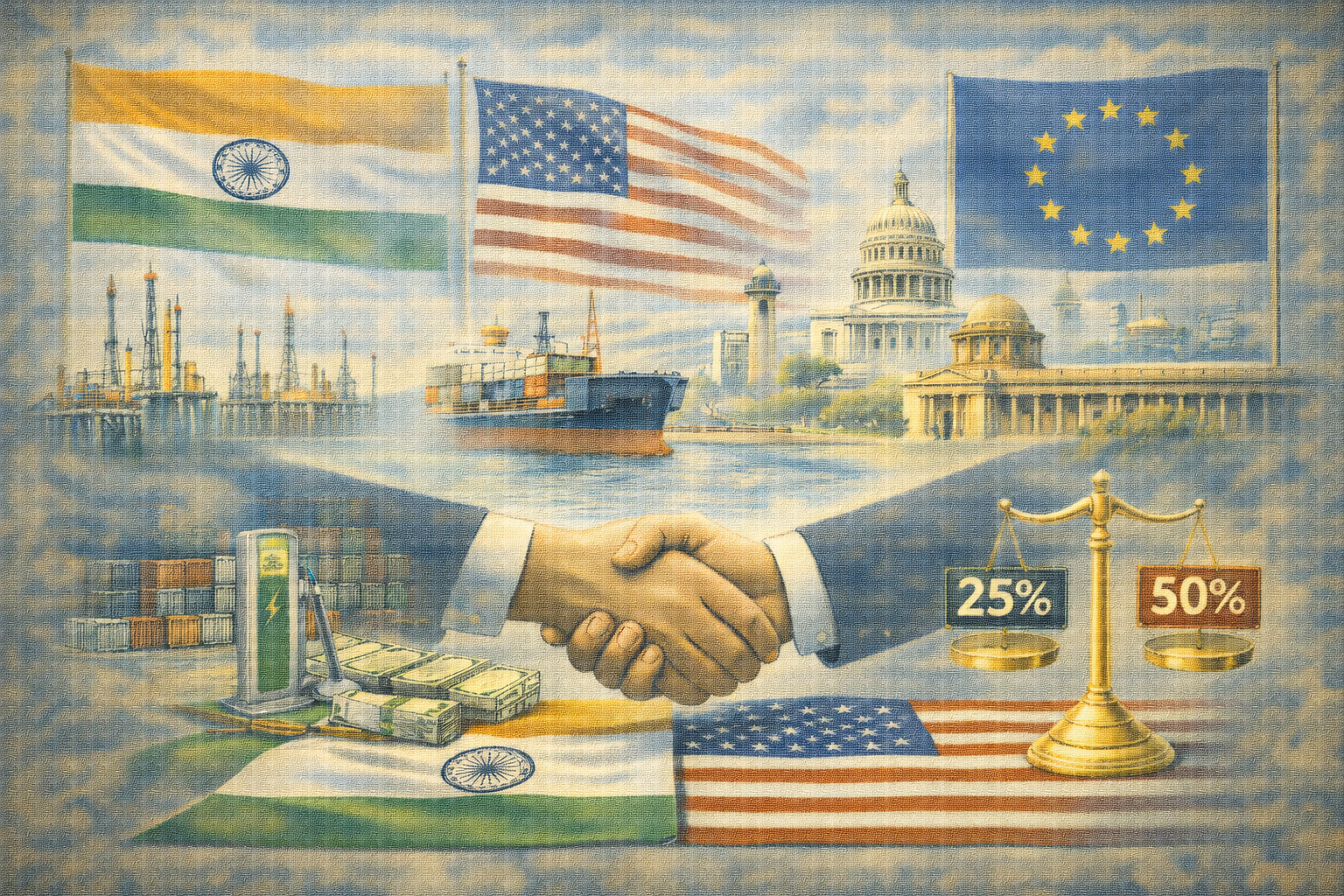
A long-awaited trade agreement between India and the United States is moving closer to completion, even as tariff frictions and geopolitical crosscurrents continue to shape negotiations.
India’s petroleum and natural gas minister Hardeep Singh Puri told CNBC that talks with Washington have reached a very advanced stage, adding to a busy day for New Delhi that also included the announcement of a fresh trade pact with the European Union.
The developments underline India’s push to position itself as an open trading partner across multiple blocs.
At the same time, they highlight the complexity of balancing parallel negotiations with the EU and the US, particularly as Washington maintains elevated tariffs on Indian exports linked to energy purchases from Russia.
With both deals unfolding against the backdrop of shifting global trade alliances, the next steps are likely to be closely watched by markets and policymakers.
Negotiations move closer
Hardeep Singh Puri told CNBC that discussions with Washington are progressing well and are nearing completion.
He indicated that officials directly involved in the negotiations have conveyed that talks are deep into their final stages, suggesting momentum despite the absence of a fixed signing timeline.
While no deadlines were outlined, the message from New Delhi was that dialogue remains constructive and that patience is required as complex trade agreements often take time to conclude.
India’s open trade stance
Indian officials framed the US talks within a broader commitment to multilateral trade.
This stance was reinforced earlier on Tuesday when India announced a free trade agreement with the EU.
Under the deal, the European Commission estimates that EU goods exports to India will double by 2032 as New Delhi removes or lowers tariffs on 96.6% of EU exports.
The tariff cuts will apply to a broad range of products, including automobiles, industrial goods, wine, chocolates, and pasta.
In exchange, India’s Ministry of Commerce and Industry said the European Union will eliminate or reduce tariffs on 99.5% of imports from India over seven years.
India has positioned this approach as mutually beneficial for its partners.
Officials suggested that openness to trade strengthens India’s appeal as a negotiating counterpart, not only for the EU but also for Washington and other economies seeking market access and supply chain diversification.
Tariffs and political pressure
Despite ongoing talks, the US continues to apply punitive tariffs on imports from both India and the EU.
European exporters currently face a 15% duty on shipments to the US, while India has been hit harder with a 50% levy.
The higher tariff on Indian goods is partly linked to New Delhi’s continued purchases of Russian oil.
These measures add an element of uncertainty to the negotiations.
There is also unease in New Delhi over how US President Donald Trump may respond to India’s newly announced EU trade agreement.
US criticism of EU deal
While the US President Donald Trump hasn’t responded to the trade deal, the US administration had already criticised the EU for the deal.
Treasury Secretary Scott Bessent publicly questioned the EU’s decision to proceed with a trade agreement with India, pointing to what he described as unequal sacrifices between Washington and its European partners.
“The US has made much bigger sacrifices than Europeans have. We have put 25% tariffs on India for buying Russian oil. Guess what happened last week? The Europeans signed a trade deal with India,” Bessent said in an interview with ABC News on Sunday.
The post India US trade deal talks near finish as tariff tensions linger appeared first on Invezz
