
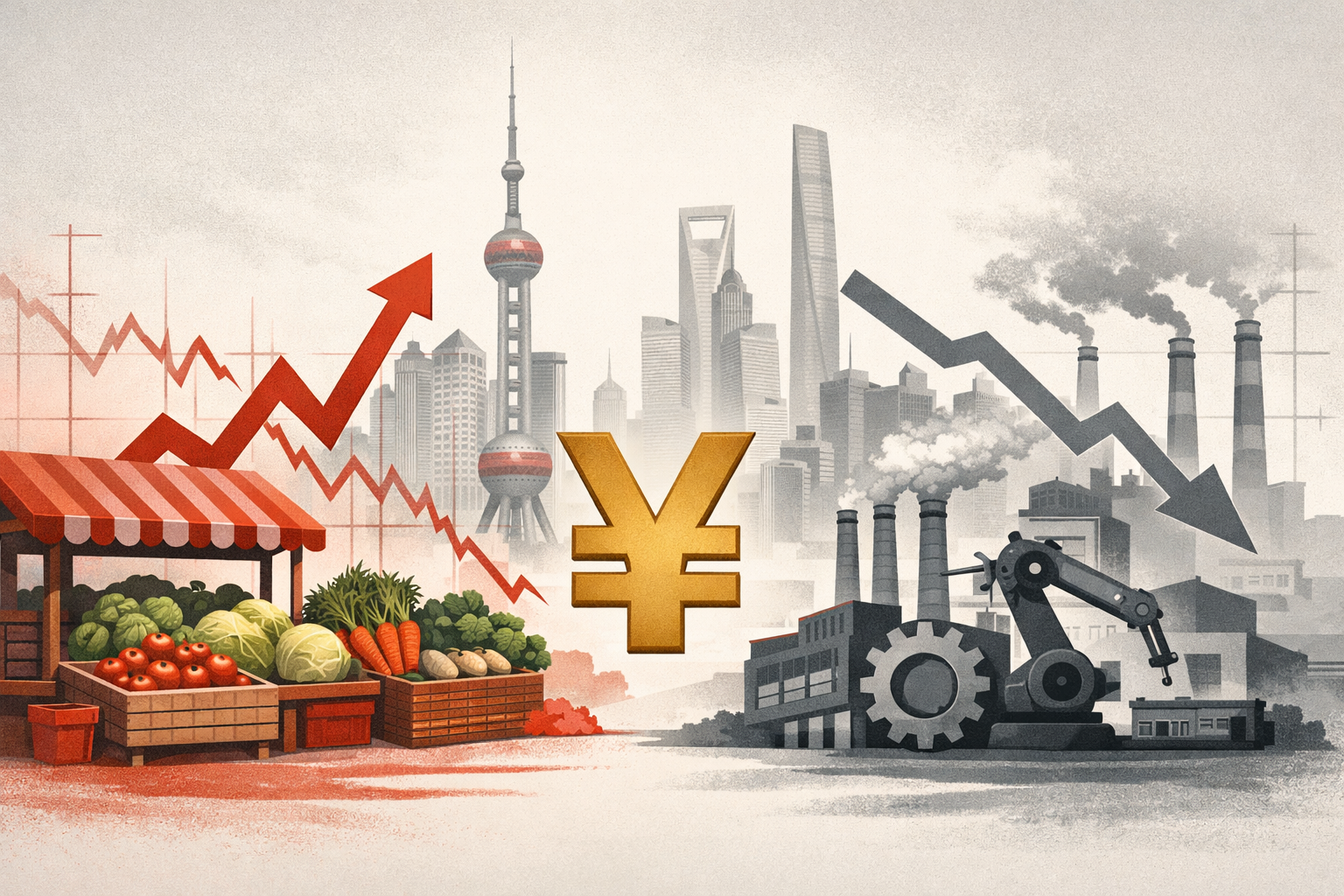
China’s consumer inflation accelerated in December to its fastest pace in nearly three years, driven by a seasonal pickup in spending ahead of the Lunar New Year, while persistent factory-gate deflation underscored continued weakness in underlying demand.
Data released by the National Bureau of Statistics (NBS) on Friday showed that consumer prices rose 0.8% year-over-year in December, the strongest reading since February 2023.
The increase followed a 0.7% rise in November and matched expectations in a Reuters poll of economists.
On a monthly basis, consumer prices climbed 0.2%, exceeding forecasts of a 0.1% gain.
Despite the late-year rebound, overall price pressures remained subdued.
For 2025 as a whole, consumer inflation was flat, falling well short of Beijing’s official target of “around 2%,” suggesting stimulus measures introduced so far have had limited impact on boosting demand.
Food prices lift headline inflation
The pickup in headline inflation was largely driven by food prices, particularly fresh vegetables, which surged 18.2% from a year earlier due to supply shortages caused by cold winter conditions.
In contrast, pork prices — a key component of China’s consumer basket — fell 14.6% year on year, reflecting high supply.
Core inflation, which strips out volatile food and energy prices and is closely watched as a gauge of underlying demand, rose 1.2% in December, unchanged from November.
This stability suggested that the improvement in headline inflation was largely seasonal rather than broad-based.
Gold jewellery prices stood out among non-food items, surging 68.5% year-over-year in December.
NBS chief statistician Dong Lijuan attributed the jump to a global rush into gold amid recession fears and heightened market uncertainty.
Producer deflation extends beyond three years
While consumer prices firmed, deflation at the factory gate remained firm.
Producer prices fell 1.9% in December from a year earlier, marking more than three years of continuous declines.
Although the drop was slightly better than the 2% fall forecast by economists and moderated from November’s 2.2% decline, it highlighted ongoing pressure on manufacturers’ margins.
The easing in producer deflation was partly supported by higher prices for non-ferrous metal materials.
Still, prices for durable consumer goods dropped 3.5% year on year, reflecting weak household demand.
Industrial profits continued to suffer, with firms reporting a 13.1% year-on-year decline in November, the steepest drop in over a year.
Growth outlook clouded by property woes
China is on track to meet its growth target of about 5% for last year, but economists remain cautious about the outlook.
Consumers have stayed reluctant to spend amid an uncertain job market and a prolonged property crisis that has eroded household wealth.
Macquarie’s chief China economist, Larry Hu, expects annual consumer inflation to remain flat in 2025, while producer prices are forecast to fall 2.7%, potentially marking the longest deflationary streak on record.
Bank of America Global Research estimates real GDP growth softened to 4.5% in the fourth quarter from 4.8% in the third, citing weaker investment activity.
Although manufacturing activity unexpectedly expanded in December, with the official PMI rising to 50.1, economists warned that policy pledges to boost consumption and stabilise the property market have yet to deliver meaningful results.
The post China inflation hits near three-year high while factory deflation drags on demand appeared first on Invezz
